
We have too much Oil?
Price Point · Issue No. 7 · The economics behind everything

Somewhere right now, a Saudi prince is investing in a solar farm. A Norwegian pension fund is investing in the stock market. An Emirati sovereign wealth fund is buying stakes in artificial intelligence companies. And a Congolese oil field is being written off as a stranded asset on a balance sheet.
These aren’t random isolated decisions. They are clear indications of a change in the structure our society works by. They are clear indications that the end of oil is beginning. Not because we are running out. But because the global economy is deliberately transitioning away from fossil fuels, and the countries, companies, and citizens dependent on oil revenue can either come along with that shift or be left behind.
The stranded asset problem
The conventional fear with oil has always been about physical scarcity. That one day the wells will run dry and society will grind to a halt. However, that fear was always somewhat overestimated. What’s actually happening is something called stranded assets.
A stranded asset is a resource that loses its economic value before it’s used up. This is so dangerous because currently over 20 countries heavily rely on oil production to survive. And those 20 countries are some of the most powerful and influential countries in the world, from USA, to Russia, to Saudi Arabia.
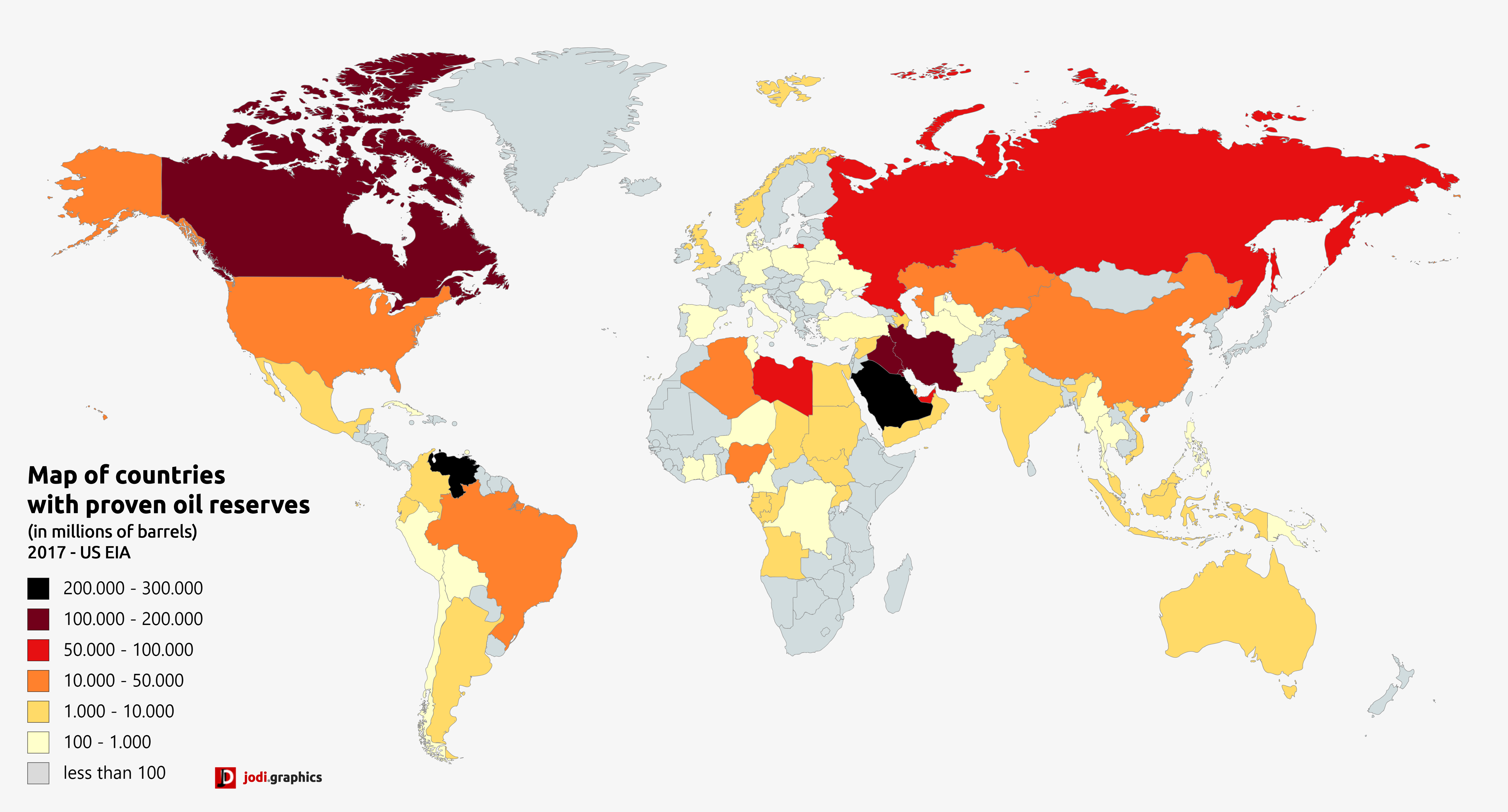
As renewable energy costs decrease and electric vehicles adoption accelerates, a significant portion of the world’s proven oil reserves may never be extracted.
Estimates (By the International Energy Agency) say that we have about 50 years of proven oil reserves left at the current rate of oil consumption. Similar estimates say that we are on track to move away from oil as the primary energy resource within 35 years. So at current production levels, our existing fields have more than enough oil to last us through the energy transition period.
For oil companies, this creates a paradox. Their entire economies are built on the back of oil, which they know will become obsolete soon. If those reserves become stranded, then all their assets, worth trillions, become effectively worthless. Somehow, the world’s largest energy companies and countries are both the most valuable and the most overvalued things on earth.
The petrodollar system
The economic consequences of the oil transition go far beyond just energy companies. Since 1974, the world’s oil has been priced exclusively in US dollars, a system known as the petrodollar. It works by having oil producing countries sell their oil in dollars, accumulate dollar reserves, and recycle those reserves into US Treasury bonds. This arrangement as given the United States an immeasurable advantage, as it can consistently run trade deficits and finance its debt at lower rates, because the entire world needs dollars to buy oil.
However, as oil demand declines over the next 50 years, the same petrodollar system crumbles. Those same countries that used to hold enormous dollar reserves because they need them for oil transactions can now slowly reduce those reserves. And since the global reserve currency, of USD, is built upon the petrodollar, it is very likely that we will see a rebalancing of global financial power.
Who loses
The economics of oil dependency reveal starkly different levels of preparation. At one extreme is Norway, which has spent the past four decades building the world’s largest sovereign wealth fund, now worth over $1.7 trillion spread across 9,000 companies. At the other extreme is countries like Nigeria, Venezuela, and Angola, which have a complete lack of economic foundations. Nigeria earns over 90% of its foreign exchange from oil, Venezuela is at 75%, and Angola is at 70%. These countries are at most risk of economic collapses during the energy transition if they don’t build alternative revenue streams soon.
In the middle of the extremes sit most middle eastern countries. Saudi Arabia needs oil prices above $80 per barrel to balance its government budget. The UAE needs $65, and Kuwait needs $90. As renewable energy drives long term oil prices lower, the Gulf state governments sit on the edge of depression, which is why things like the Saudi Arabia Vision 2030 plan are extremely necessary for the country’s long term economic survival.
Who wins
The transition away from oil doesn’t destroy economic value, it simply redistributes it. And the redistribution shows a set of countries which are predicted to be the next generation’s petrostates.
The critical minerals required for the energy transition, including lithium, cobalt, nickel, copper, and rare earth elements, are the oil of the future. Fittingly, the countries with the most of these resources are the petrostates of the 21st century. They are… Chile and Australia for lithium. Congo for cobalt. Indonesia for nickel. China has the processing infrastructure of these minerals, which means it may hold the most strategically powerful position of all.
So as the world transitions away from fossil fuels to reduce resource dependence, we end up creating new resource dependencies, new chokepoints, and new resource powerhouses. I guess that is exactly what economics predicts, since scarcity, concentration, and resource extraction will never stop, only shift.
The bottom line
At the end of the day, the energy transition is inescapable, and the only thing we really can do is make it as smooth as possible. A gradual 30-40 year decline in oil demand gives petrostates time to diversify, oil companies time to pivot, and financial markets time to price the adjustment. In this next 50 years of extreme economic instability, as long as we don’t have a global economic crash, we should count that as a win.
Current trajectory shows we are on the current path. The International Energy Agency predicts oil demand making in the late 2020s and early 2030s, before beginning a gradual multi decade long decline. What happens in the 50 years may just define the future of humanity over the next several centuries.
If this made you see the world differently, or you learned something new, share it with someone who needs to read it. And if you aren’t subscribed to Price Point yet, hit the subscribe button and join the conversation. Free, always.